5 Tips to Improve Your SaaS Customer Support Strategy

If you are a SaaS company, then you know that customer support is essential to your success. Your customers rely on you to help them resolve any issues they encounter, and if you don’t provide good customer support, they will be quick to leave.
In fact, research shows that companies with strong customer support experience 25% higher customer lifetime value (CLV) and see significantly reduced customer churn rates.
This comprehensive guide explores 5 essential tips to improve your SaaS customer support strategy, backed by best practices and real-world examples.
Whether you’re building a B2B SaaS support strategy, implementing a tiered support model (L1, L2, L3), or optimizing your customer success vs. customer support approach, these actionable strategies will help you create exceptional experiences that drive support-driven growth.
Follow these tips, and you can be sure that your customers will be happy with the level of support you provide, and your retention rates will reflect that success.
What is SaaS Customer Support?
SaaS customer support is a specialized service that helps customers with any issues they may have when using a cloud-based software product or service. It extends beyond traditional customer service to include troubleshooting problems, providing technical assistance, answering customer questions, and proactively supporting users throughout their entire journey.
SaaS customer support teams are typically available on-demand and through various channels, such as:
- Phone and live chat
- Chatbots and AI-driven support tools
- Social media
- In-app messaging for support
- Self-service customer portal and knowledge base
The modern cloud software customer service approach emphasizes omnichannel availability, rapid response times, and integration with the product itself through contextual support tools and interactive tutorials and walkthroughs.
Why is Customer Support Critical for SaaS Companies?
Customer support is absolutely essential for SaaS companies because it directly impacts your bottom line:
Key Statistics on SaaS Support Impact:
- Customer Retention: Poor customer support leads to increased churn rates. Strong support-driven strategies can reduce customer churn by up to 30%.
- Customer Lifetime Value (CLV): Companies that invest in quality support see 25% higher CLV compared to competitors.
- Trust & Loyalty: 72% of customers say that the quality of customer service is what makes them loyal to a brand.
- Revenue Growth: Proactive customer support can increase upselling and cross-selling opportunities by 40%.
Quality customer support builds customer experience (CX) for SaaS that directly impacts:
- Positive reviews and reputation: Avoiding negative reviews that damage brand credibility
- Higher customer retention rates: Improving activation rates and reducing customer churn
- Long-term relationships: Creating advocates who recommend your product
- Support metrics that matter: Optimizing First Response Time (FRT), Average Resolution Time (ART), and Customer Satisfaction Score (CSAT)
By implementing a data-driven approach to subscription business support, you create a competitive advantage that directly correlates with business growth.

5 Tips to Improve Your SaaS Customer Support Strategy
The essential tips to improve SaaS customer support strategy are as follows:
Tip 1: Develop a Comprehensive Knowledge Base and Self-Service Portal
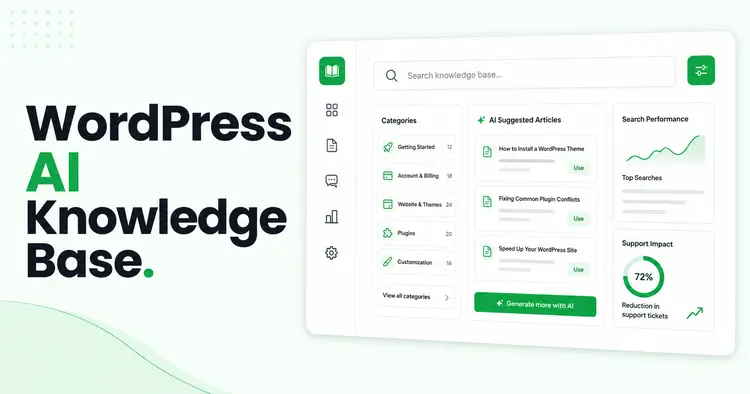
Creating a SaaS knowledge base is non-negotiable for reducing support ticket volume trends and empowering customers to solve issues independently. A comprehensive knowledge base includes:
Core Components:
- FAQ automation: Automatically surface answers to common questions.
- Step-by-step tutorials: Visual and text-based guides for common tasks.
- Interactive tutorials and walkthroughs: Engage users with video content and interactive demos
- Help center optimization: Organize content logically with excellent search functionality.
- In-app messaging for support: Embed helpful content directly where users need it.
Strategic Benefits:
- Reduces support ticket volume: Well-designed self-service reduces incoming tickets by up to 50%.
- Improves First Response Time (FRT): Customers get instant answers without waiting for the agent’s response.
- Enables 24/7 global support coverage: Provide support outside business hours through automated resources.
- Lowers operational costs: Deflect tickets before they reach your support team.
- Improves Customer Satisfaction Score (CSAT): Self-service users often report higher satisfaction when resources are quality.
Implementation Best Practices:
- Use SaaS knowledge base best practices like clear categorization, consistent formatting, and regular updates.
- Implement a self-service customer portal that tracks user progress and makes content discoverable.
- Include video tutorials and contextual support tools that appear in-app when users need them most.
- Regularly analyze which articles receive the most views and which topics need expansion.
Tip 2: Implement Multi-Channel SaaS Support
Implementing multi-channel support is key to providing a good customer experience.
Multi-channel SaaS support means offering customers multiple contact methods and creating a seamless experience across all touchpoints. Modern customers expect to reach support on their preferred platform.
Essential Support Channels:
- Live chat: Ideal for quick questions and immediate assistance.
- Email support: For detailed issues requiring longer explanations.
- Phone support: For complex technical issues needing real-time conversation.
- Community forums for SaaS users: Enable peer-to-peer support and knowledge sharing.
- Social media support: Meet customers where they are.
- In-app messaging for support: Provide contextual help without leaving the product.
- AI chatbots for SaaS: Handle routine inquiries and triage tickets.
Key Statistics on Multi-Channel Support:
- Companies offering multi-channel support see 40% higher customer satisfaction rates.
- Support ticket routing and escalation systems reduce resolution time by enabling tickets to reach the right agent.
- Customers using preferred communication channels have 30% shorter Average Resolution Time (ART).
Advanced Strategies:
- Implement ticket routing and escalation workflows that automatically assign tickets based on complexity (following your tiered support model)
- Use AI-driven support sentiment analysis to identify frustrated customers early
- Create tiered support levels: L1 (AI/chatbots), L2 (experienced agents), L3 (specialists)
- Ensure 24/7 global support coverage for international customers
Tip 3: Utilize Automation to Scale Support Efficiently
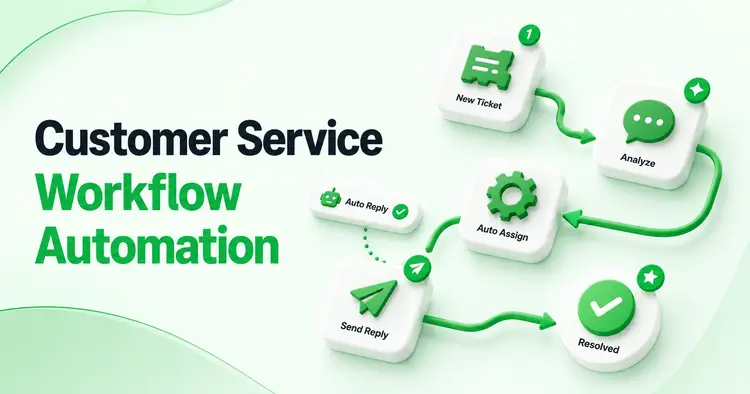
Automation is the cornerstone of scalable B2B SaaS support strategies. By automating repetitive tasks, your team focuses on complex issues requiring human expertise.
High-Impact Automation Opportunities:
- AI chatbots for SaaS: Handle up to 80% of routine inquiries automatically.
- Automated customer onboarding: Reduce implementation time and improve activation rates.
- Support ticket deflection: Intelligently route customers to knowledge base before agent interaction.
- Automated responses: Set expectations with immediate acknowledgment.
- FAQ automation: Dynamically suggest answers based on ticket keywords.
- Ticket routing and escalation: Automatically assign to correct agent or team.
- Contextual support tools: Trigger help content based on user behavior.
Key Benefits:
- Reduces support ticket volume without adding staff
- Improves First Response Time (FRT) to near-instantaneous
- Lowers ticket-to-customer ratio by deflecting issues before they become tickets
- 24/7 availability without human agents working around the clock
- Consistent quality across all interactions
Implementation Tips:
- Start with your most common support requests using FAQ automation.
- Implement automated customer onboarding to improve activation rates.
- Use AI-driven support sentiment analysis to escalate frustrated customers to humans.
- Monitor deflection metrics and continuously refine automation rules.
Tip 4: Train Your Team to Provide Personalized Support at Scale
While automation handles routine issues, personalized support at scale is where SaaS companies differentiate themselves. This combines human empathy with customer data.
Building a Customer-Centric Support Culture:
- Customer-centric SaaS culture – Train teams to view customers as partners, not tickets
- Personalized support at scale – Use customer data to tailor interactions without losing efficiency
- Product-led support – Integrate support deeply with product insights and customer behavior
- Integrating support with product roadmap – Use support feedback to inform product development
- SaaS onboarding process – Provide personalized guidance during critical early stages
- Customer education programs – Offer training and certification to build expertise
Key Metrics to Track:
- Customer Satisfaction Score (CSAT) – Target 85%+ satisfaction
- Net Promoter Score (NPS) – Measure customer loyalty and advocacy
- Customer Effort Score (CES) – Make support easy and effortless
- Average Resolution Time (ART) – Faster resolutions improve satisfaction
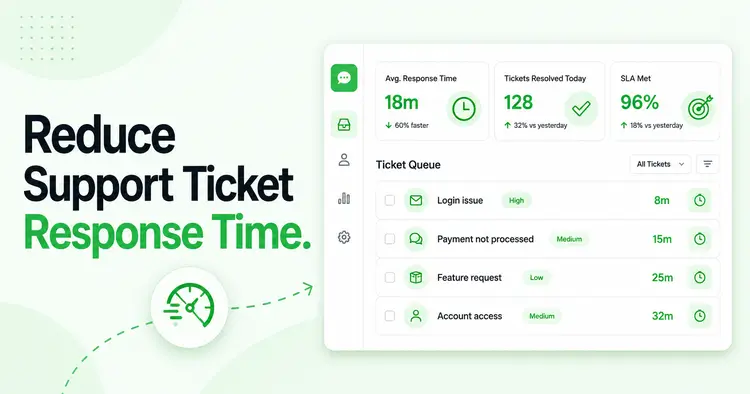
- First Response Time (FRT) – First impression matters significantly
Best Practices:
- Personalize interactions: Address customers by name and reference their usage history
- Understand customer success vs. customer support: Move beyond reactive support to proactive guidance
- Implement Service Level Agreements (SLAs) for SaaS: Set clear expectations and meet them consistently
- Regular training: Keep team updated on product changes and support best practices
- Empower agents: Give teams authority to solve issues without constant escalation.
Tip 5: Monitor and Act on Customer Feedback (Using Data-Driven Metrics)
Data-driven support means continuously measuring performance and using insights to improve your SaaS support model. Customer feedback is invaluable for identifying gaps and opportunities.
Essential Metrics and KPIs:
| Metric | Definition | Target |
|---|---|---|
| Customer Satisfaction Score (CSAT) | Percentage of customers satisfied with support | 85%+ |
| Net Promoter Score (NPS) | Likelihood to recommend (0-100 scale) | 50+ |
| Customer Effort Score (CES) | Ease of resolving issues (1-5 scale) | 4.5+ |
| First Response Time (FRT) | Time to first agent response | <1 hour |
| Average Resolution Time (ART) | Total time to close ticket | <24 hours |
| Support Ticket Volume Trends | Monthly ticket count and patterns | Monitor trends |
| Ticket-to-Customer Ratio | Tickets per active customer | <0.5 |
| Customer Churn Rate | Percentage of customers lost monthly | <5% |
| Activation Rate in SaaS | % of customers who complete onboarding | >80% |
| Customer Lifetime Value (CLV) | Total expected revenue per customer | Maximize |
Using Data to Drive Improvements:
- AI-driven support sentiment analysis: Identify frustrated customers and escalate proactively.
- Support ticket volume trends: Spot emerging issues and add resources.
- Reducing churn with proactive support: Use data to identify at-risk customers and intervene.
- Improving SaaS user retention through service: Track which support interactions impact retention.
- Handling technical debt in customer support: Use feedback to prioritize product fixes.
Advanced Strategies:
- Implement customer education programs based on data showing which topics cause the most support requests.
- Create community forums for SaaS users to crowdsource solutions.
- Use customer feedback to drive support-driven growth initiatives.
- Build the best customer support tools for startups that scale with your business.
- Develop SaaS support for enterprise vs. SMB tailored approaches.
Examples of Companies with Exceptional SaaS Customer Support
Semrush
Semrush is one of the leading B2B SaaS platforms for SEO and digital marketing tools. It exemplifies 24/7 global support coverage through:
- Dedicated 24/7 support on SEO, content marketing, and advertising tools.
- Multiple resources, including interactive tutorials and walkthroughs, webinars, and live chat.
- Fast response times and a comprehensive knowledge base.
- SaaS help desk functionality is integrated with customer onboarding.
- In-app messaging for support, guiding users through features.
Result: Semrush maintains a high Customer Satisfaction Score (CSAT) through consistent, available support that helps users fully leverage their comprehensive marketing suite.
Klaviyo
Klaviyo is a popular email and SMS marketing automation platform demonstrating effective multi-channel SaaS support:
- Specialized assistance for users across all experience levels.
- Tailored solutions for email marketing, data integrations, and customer engagement.
- Support channels include live chat, automated customer onboarding, training sessions, and an extensive help center.
- Product-led support is integrated with their analytics platform.
- Community forums for SaaS users fostering peer learning.
Key Strength: They excel at personalized support at scale by combining automation with human expertise.
HubSpot
HubSpot is a widely-used CRM and inbound marketing platform standing out for exceptional multi-channel support:
- Live chat and email support are available to all users.
- SaaS knowledge base best practices through HubSpot Academy with certifications.
- Customer success vs. customer support approach with dedicated customer success managers.
- Personalized onboarding and strategy sessions.
- Help center optimization with thousands of articles and video tutorials.
Strategy: HubSpot’s customer-centric SaaS culture ensures every interaction adds value and builds loyalty.
Canva
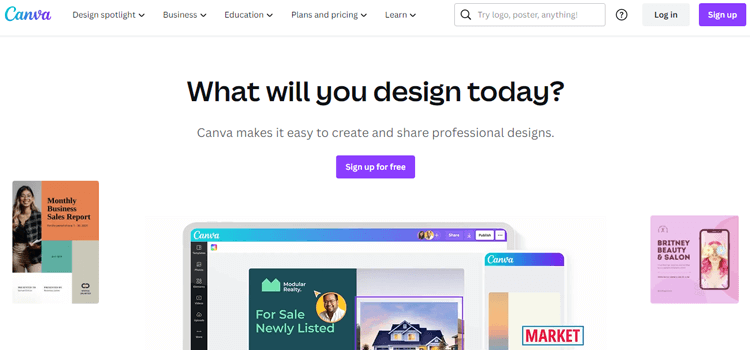
Canva has revolutionized graphic design through its innovative approach to SaaS customer service:
- Knowledgeable support team available to assist with technical or design questions.
- Interactive tutorials and walkthroughs are embedded in the product.
- In-app messaging for support provides contextual help.
- Self-service customer portal with comprehensive design resources.
- Community forums for SaaS users where users share designs and tips.
Result: Canva maintains strong activation rates and user retention through accessible, responsive support.
ClickUp
ClickUp is a powerful cloud-based project management tool exemplifying exceptional customer service:
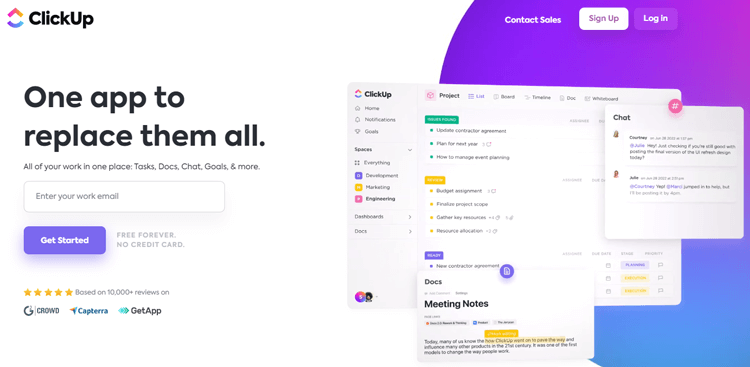
- Knowledgeable support agents available 24/7 (implementing 24/7 global support coverage).
- Deep product expertise enabling fast, quality resolutions.
- SaaS onboarding process that guides new users through key features.
- Regular customer education programs and webinars.
- Dedicated commitment to maximizing each user’s success (reducing customer churn rate).
The support team is well-versed in the platform’s features and capabilities, and they work tirelessly to ensure users can make the most of the platform.

Frequently Asked Questions
What is the 3-3-2-2 rule of SaaS?
The 3-3-2-2 rule represents the optimal SaaS pricing strategy: 3 pricing tiers at 3X increments, with 2 features added per tier and 2 customers in target market segments. This balanced approach maximizes conversion while managing product complexity and customer segmentation effectively.
What aspects should an ideal knowledge base possess?
An ideal knowledge base should provide detailed and easy-to-understand information about the product, its features, and how to use it. It should also include helpful resources such as troubleshooting guides, frequently asked questions (FAQs), and instructional videos.
What skills are needed for SaaS?
Essential SaaS skills include product development, data analysis, customer relationship management, marketing automation, cloud infrastructure knowledge, and customer success management. Soft skills like communication, problem-solving, and strategic thinking are equally important for building and scaling successful SaaS businesses.
What are the 5 skills of a customer service?
The five core customer service skills are:
(1) Active Listening – fully understanding customer needs;
(2) Empathy – understanding customer emotions; (3) Problem-Solving – finding quick resolutions; (4) Communication – clear, professional interactions; and
(5) Patience – remaining calm under pressure during difficult situations.
What is the customer responsible for in a SaaS?
Customers are responsible for:
(1) providing accurate information during onboarding;
(2) maintaining secure login credentials;
(3) adhering to usage terms and policies;
(4) providing feedback for improvements; and
(5) ensuring they have appropriate training for effective software usage.
This shared responsibility improves outcomes for both parties.
What is the main role of customer support?
Customer support’s main role is resolving customer issues quickly while building satisfaction and loyalty.
Beyond problem-solving, modern support teams: (1) gather product feedback;
(2) educate customers on features;
(3) reduce churn through proactive assistance;
(4) identify upselling opportunities; and
(5) advocate for customers internally to drive product improvements.
What types of customer support channels are available?
There are a variety of customer support channels available, including live chat, email, knowledge base, forum, Facebook group, and support ticket. Depending on the needs of your customers and the nature of their queries, you can use any combination of these channels to provide the best customer experience.
Support Genix
WordPress Support Ticket Plugin
Take Your Customer Support to The Next Level and Boost Customer Satisfaction Rates
Conclusion
Strong customer support is essential for any business, but it is particularly critical for SaaS companies operating in competitive markets. SaaS customer support has evolved from reactive problem-solving to strategic support-driven growth initiatives that directly impact retention, revenue, and competitive positioning.
By implementing these evidence-based strategies—from building SaaS knowledge base best practices to establishing 24/7 global support coverage, leveraging AI-driven support sentiment analysis, and creating a customer-centric SaaS culture—you establish your company as a leader in cloud software customer service excellence.
The companies winning in SaaS understand that customer success vs. customer support is a false choice. Modern B2B SaaS support strategies integrate both approaches into a seamless experience that reduces customer churn rate, increases customer lifetime value (CLV), and builds lasting customer relationships.
Ready to Transform Your SaaS Customer Support?
Exceptional customer support isn’t just a cost center—it’s a strategic growth engine. Whether you’re improving your SaaS help desk, scaling a customer-centric SaaS culture, or implementing multi-channel SaaS support, the right approach matters.